
Home / News / Industry News / When OPA Is Not Enough: Ventilation Priority in Unresponsive Trauma Patients
Content
An unresponsive trauma patient has an oropharyngeal airway in place, with shallow and labored respirations and dusky skin. The trauma team has already placed the OPA as a basic airway adjunct. Yet the patient is clearly not breathing effectively. The conundrum is real: the airway looks managed, but the patient is failing to ventilate.
The answer is straightforward: bag-mask ventilation with 100% oxygen must begin immediately. The OPA maintains upper airway patency but does not generate positive pressure or deliver adequate tidal volume. Dusky skin in a trauma patient is a clinical indicator of severe hypoxemia, and shallow labored respirations confirm that spontaneous ventilation is insufficient.
An oropharyngeal airway is a rigid, curved device inserted through the mouth and positioned between the lips and the posterior pharynx. Its core function is to prevent the tongue from collapsing backward against the posterior pharyngeal wall in an unresponsive patient.
This is critical in trauma because the tongue remains the most common cause of upper airway obstruction. But the OPA is purely a patency adjunct. It provides no ventilation support. It does not increase tidal volume, cannot apply positive pressure, and does not compensate for inadequate respiratory drive or muscle weakness.
When you look at a patient with an OPA in place, the device says nothing about the adequacy of breathing. You must continue to assess chest rise, respiratory rate, work of breathing, skin color, and oxygen saturation.
In this scenario, three findings are immediately concerning:
These findings together indicate that the upper airway is open, but the lungs are not receiving enough oxygen. The trauma team may have addressed the airway with the OPA, but the breathing component of the ABC assessment has now failed.
A rapid evaluation should include measurement of respiratory rate, pulse oximetry (SpO2), and preferably waveform capnography. In an adult trauma patient, a respiratory rate below 10 breaths per minute or above 30 per minute, combined with poor SpO2, is a clear mandate for ventilatory support. Capnography is particularly useful after airway placement; a continuous waveform confirms that ventilation is occurring. A flat or very low end-tidal CO2 next to a dusky patient should raise the suspicion of a tension pneumothorax, cardiac arrest, or airway displacement.
Once the airway is patent via OPA and breathing is inadequate, bag-mask ventilation (BVM) with 100% oxygen is the next step. The goal is to deliver positive pressure ventilation at a rate of 10 to 12 breaths per minute in an adult while maintaining the airway.
The OPA can remain in place during BVM. It helps keep the tongue from falling backward and improves the mask seal when the jaw is well supported. Some clinicians remove it if the mask cannot seal properly, but in most cases, it remains a helpful adjunct.
After several breaths, reassess chest rise, skin color, and SpO2. If there is improvement, continue ventilation while preparing for transport or a definitive airway. If there is no improvement, consider whether the OPA is appropriately sized, whether the mask seal is effective, and whether a more advanced airway is needed. Common pitfalls during BVM include an inadequate mask seal, a ventilation rate that is too fast, and failure to look for chest rise. Excessive ventilatory rate also increases intrathoracic pressure and compromises venous return.
Bag-mask ventilation is effective as a bridge, but in trauma it is rarely an endpoint. If the patient remains unresponsive, has a high risk of aspiration, or needs prolonged ventilation, the team should plan for a definitive airway.
| Device | Main Function | Ventilation Capability | Typical Indication |
|---|---|---|---|
| Oropharyngeal airway (OPA) | Prevents tongue obstruction | No | Unresponsive patient without gag reflex |
| Nasopharyngeal airway (NPA) | Bypasses soft palate obstruction | No | Patient with gag reflex or oral trauma |
| Bag-valve-mask (BVM) | Provides positive pressure ventilation | Yes | Any patient with inadequate breathing |
| Endotracheal tube (ETT) | Secures the airway definitively | Yes | Failed ventilation, high aspiration risk, prolonged ventilation |
| Laryngeal mask airway (LMA) | Seals the supraglottic airway | Yes | Rescue airway when intubation fails |
For trauma patients, the choice between endotracheal intubation and a laryngeal mask airway (LMA) depends on clinical context. Intubation offers the most reliable protection against aspiration, while an LMA can be placed faster and with less hemodynamic stress in selected situations.
Endotracheal intubation remains the gold standard for definitive airway management in trauma. The standard of care is to preoxygenate with 100% oxygen through BVM, then attempt laryngoscopy and tube placement. In the uncontrolled environment of trauma, choosing the right tube matters.
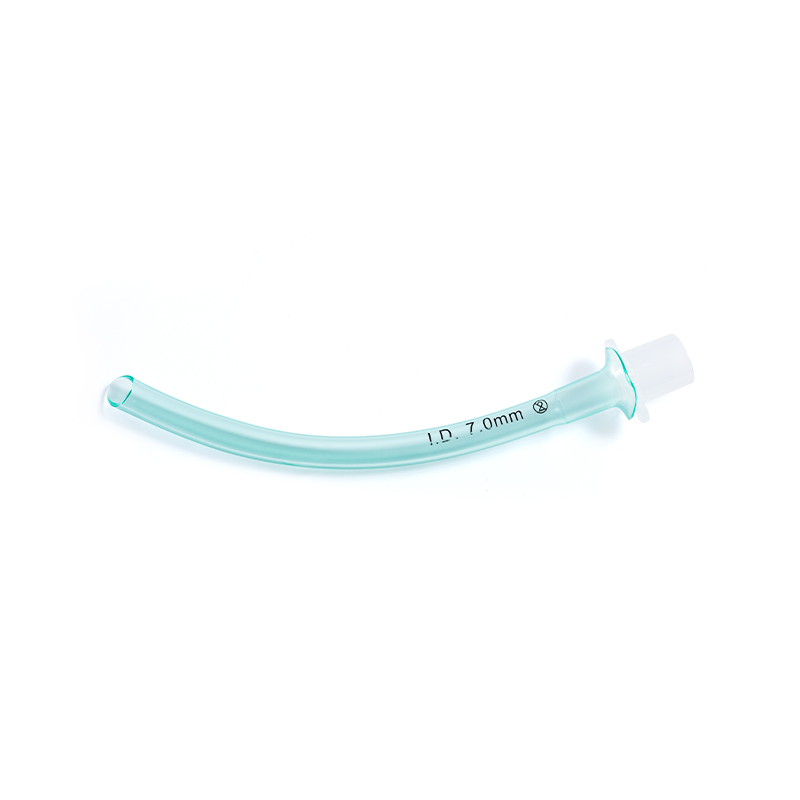
For trauma, a reinforced cuffed endotracheal tube with an evacuation lumen provides several advantages. The reinforced shaft resists kinking during patient transport and during surgical manipulation. The evacuation lumen allows suctioning of blood, secretions, or vomit simultaneously with ventilation, which is critical when the patient has maxillofacial trauma or a full stomach. Tube size selection is also relevant: an adult female may require a 7.0 mm internal diameter tube, while an adult male usually needs 7.5 or 8.0 mm. A larger tube is preferred when feasible because it simplifies suctioning and bronchoscopy later.
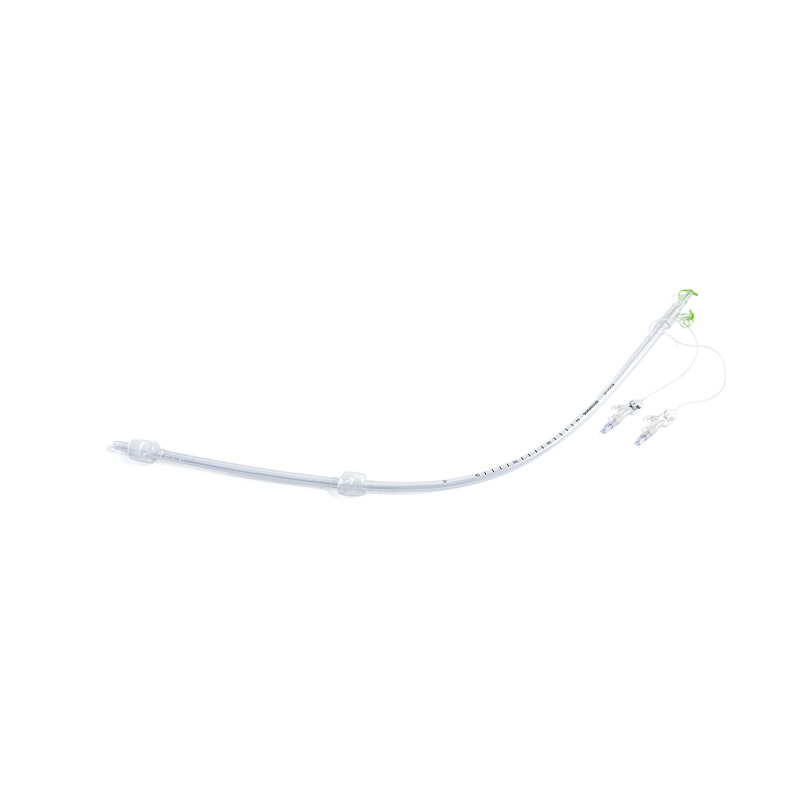
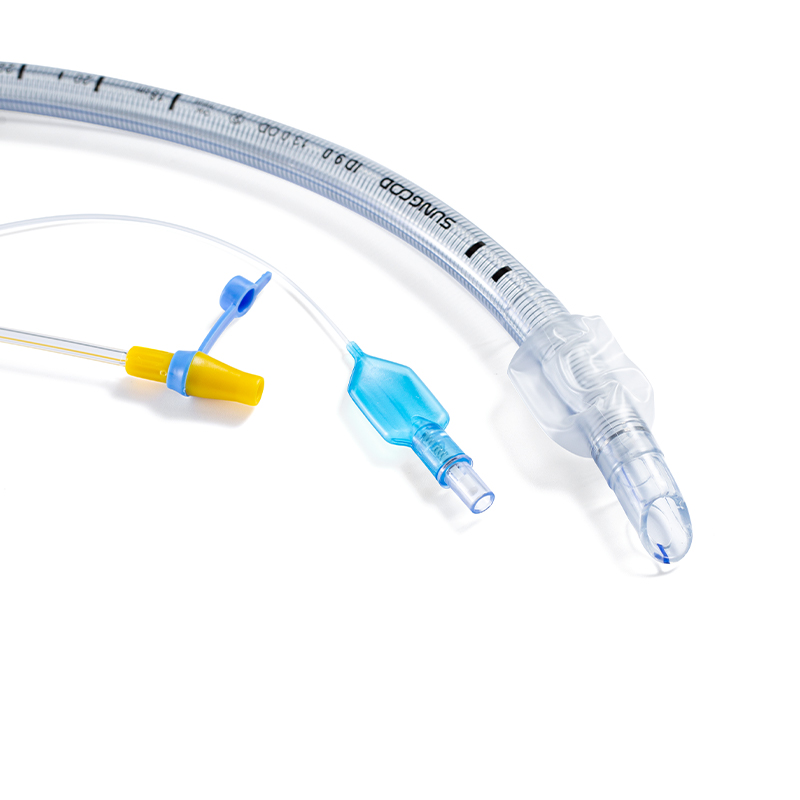 Reinforced Cuffed Endotracheal Tube with Evacuation LumenDesigned for trauma and long-term ventilation, this tube resists kinking during transport and allows simultaneous suctioning of secretions, improving airway safety and care efficiency.View Product →
When intubation is difficult or impossible, a laryngeal mask airway provides a reasonable alternative. In trauma, the major concern with a standard LMA is aspiration of gastric contents. Devices with a double-lumen and anti-aspiration design help mitigate this risk by allowing gastric access, drainage, or insertion of a nasogastric tube.
Complications of LMA placement can include malposition, cuff leak, or airway trauma. Operator training and familiarity with sizing guidelines are essential. For trauma care, sizing is determined by patient weight: size 3 is generally appropriate for 30 to 50 kg patients, size 4 for 50 to 70 kg, and size 5 for above 70 kg. Confirmation of adequate placement relies on chest rise, absence of an audible leak, and a stable capnography waveform.
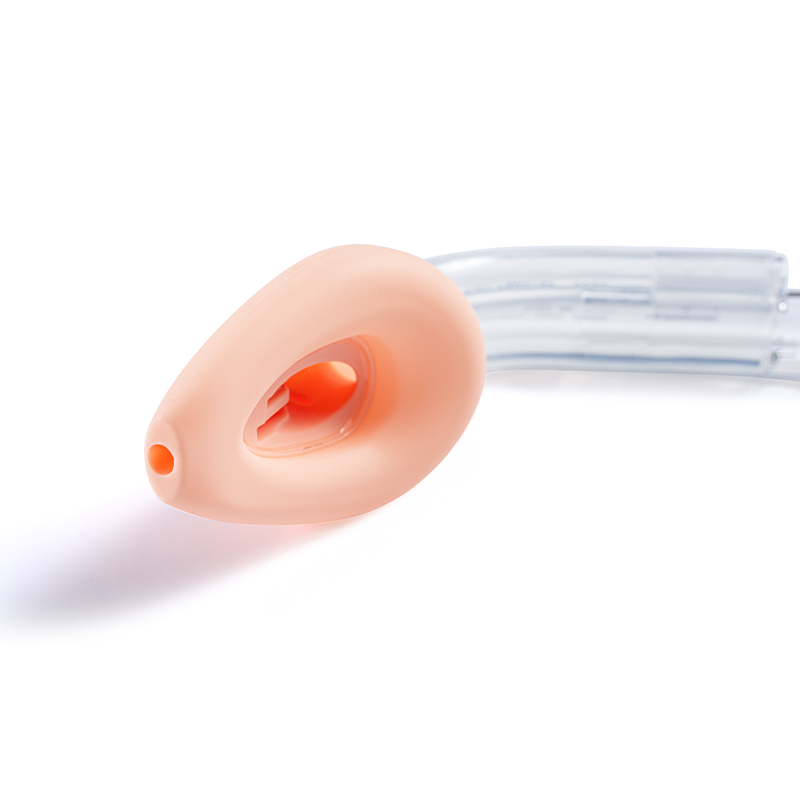 Double-Lumen Anti-Aspiration Laryngeal Mask AirwayWith dual channels for gastric drainage and secretion aspiration, this silicone LMA reduces aspiration risk in trauma or full-stomach patients, offering a safer supraglottic airway option.View Product →
For a deeper look at insertion technique and sizing, this guide on laryngeal mask airway placement reviews the key steps in emergency settings.
After the initial stabilization, the chosen airway devices must remain secured and monitored. Cuff pressure, in particular, is a fragile parameter. Recommended cuff pressure ranges from 20 to 30 cmH2O. Pressures above 30 cmH2O reduce tracheal mucosal perfusion; pressures below 20 cmH2O increase the risk of aspiration and air leak.
A reliable cuff pressure monitoring system provides real-time pressure readings, helping the clinician maintain the target range. This is a tool that should be available in the trauma resuscitation bay and during transport. The cuff pressure should be checked after intubation, after any patient movement, and before transport.
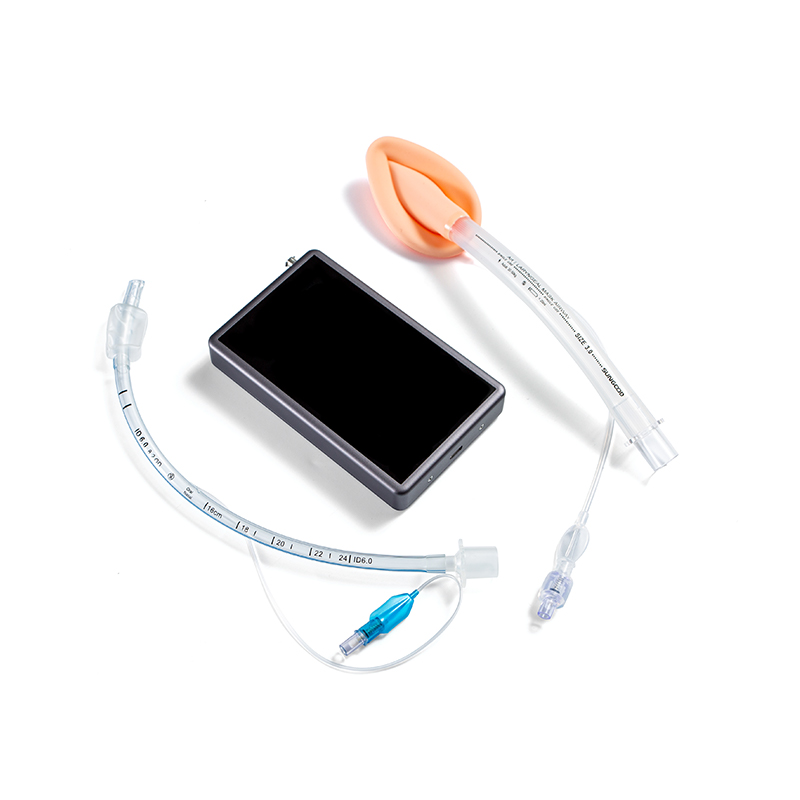 Airway Cuff Pressure Monitoring SystemThis system provides real-time cuff pressure control with high accuracy, helping prevent ventilator-associated pneumonia and ensuring safe cuff management during ventilation and transport.View Product →
In addition to the devices described, a trauma airway kit should contain appropriately sized OPAs, NPAs, a bag-mask with reservoir, a high-flow oxygen source, an optional video laryngoscope, suction tubing, and a surgical airway kit. These airway management solutions are part of a broader respiratory and anesthesia product line. For an overview of the full range, see our respiratory and anesthesia series.
When an unresponsive trauma patient presents with an oropharyngeal airway in place and signs of inadequate breathing, the decision pathway is clear:
Trauma teams are trained to think in seconds. The OPA is not the finish line: it is a first step. Ventilation is the next essential action, and choosing the right tube, mask, or monitoring device can make the difference between a stable outcome and a preventable complication.
Product Categories
Contact Us

+86-571-87687066
+86-18106505367

Workshop 1, 1st Floor(Zone B), 3rd Floor; Office Building 3rd&4th Floors, No. 550 Yinhai Street, Baiyang Sub-district, Qiantang District, Hangzhou City, Zhejiang Province, P.R.China
Ready to Begin?
Get in Touch

Now!

sungood

 English
 Español