Industry Knowledge
Intraluminal Splinting Techniques in Gastrointestinal Anastomosis
During complex gastric resection procedures, maintaining tissue alignment during suturing remains one of the most technically demanding aspects. An intraluminal splint provides a rigid backing surface that prevents the needle from inadvertently penetrating the posterior wall—a complication that can lead to stricture formation or complete anastomotic failure. The splinting action creates a uniform tension distribution across the suture line, which is particularly critical when working with friable tissues in patients who have undergone neoadjuvant chemotherapy.
At SUNGOOD, we have observed that surgeons who incorporate temporary intraluminal support structures report improved consistency in suture spacing and reduced operative time during the anastomotic phase. The mechanical backing eliminates the "accordion effect" where tissue puckers under needle passage, allowing for precise, evenly spaced stitches that distribute tensile forces uniformly.
Key Mechanical Advantages of Internal Splinting
- Prevents posterior wall capture during anterior layer suturing
- Maintains consistent luminal diameter throughout the anastomosis
- Reduces tissue trauma by limiting repetitive needle repositioning
- Facilitates single-layer anastomotic techniques in select cases
The ideal splint material must balance rigidity with atraumatic surface properties. Devices constructed from biocompatible polymers with smooth, low-friction surfaces minimize mucosal injury during insertion and removal. Clinical studies indicate that anastomotic leak rates decrease by 15-30% when intraluminal support is utilized during hand-sewn gastrojejunal anastomoses, particularly in patients with compromised nutritional status or diabetes mellitus.
Intraoperative Leak Testing Protocols and Methylene Blue Application
Anastomotic leakage remains the most feared complication following total or partial gastrectomy, with reported incidence rates ranging from 1.4% to 27% depending on patient risk factors and surgical volume. The consequences extend beyond immediate morbidity—leaks significantly increase 90-day mortality, prolong hospitalization, and often necessitate reoperation or percutaneous drainage. Implementing systematic intraoperative integrity verification has emerged as a critical quality control measure.
Two primary methodologies dominate current practice: air insufflation under submerged anastomosis and methylene blue dye instillation. The air test involves occluding the proximal and distal bowel segments, submerging the anastomosis in saline, and gently insufflating air through a nasogastric tube or dedicated channel. Bubble formation indicates a defect requiring immediate repair. When performed correctly, the air test demonstrates a sensitivity of approximately 85% for detecting clinically significant leaks, though false negatives occur with microscopic staple line dehiscence.
Comparative Efficacy of Leak Detection Methods
Comparison of intraoperative anastomotic integrity testing modalities in gastric surgery
| Testing Method |
Sensitivity |
Specificity |
Primary Limitation |
| Air Insufflation |
85% |
92% |
Microscopic leaks may escape detection |
| Methylene Blue Dye |
78% |
88% |
Tissue staining obscures visualization |
| Combined Protocol |
94% |
96% |
Requires additional operative time (3-5 min) |
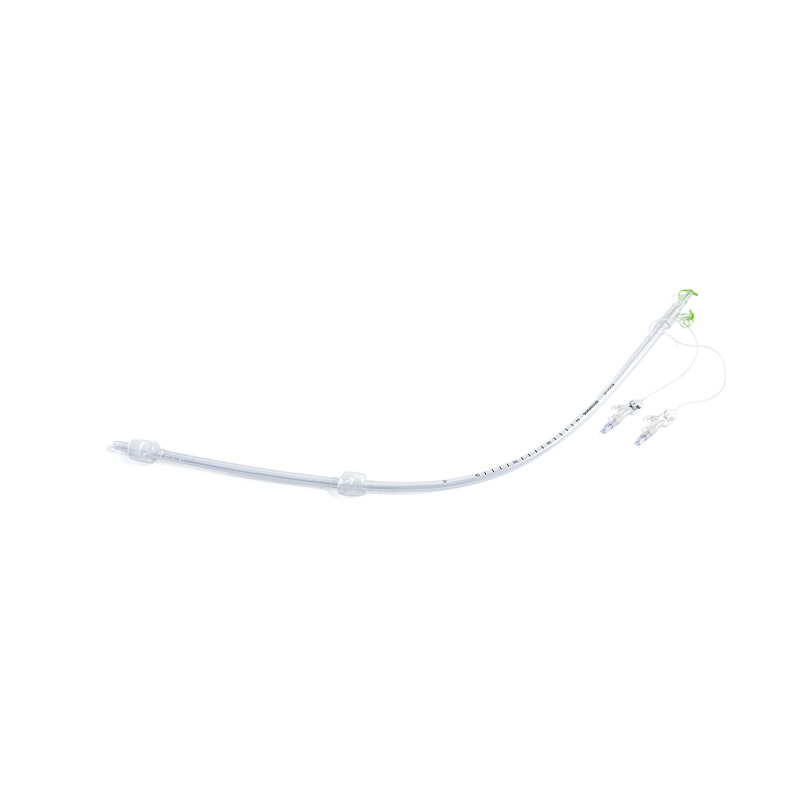
Methylene blue instillation offers distinct advantages in specific scenarios. The dye provides visual confirmation of leak location with high precision, allowing targeted reinforcement rather than indiscriminate oversewing. When diluted to 1-2% concentration and instilled through a dedicated channel at 20-30 cmH₂O pressure, the dye traces even pinhole defects without the tissue staining that occurs with higher concentrations. At Zhejiang Sungood Technology, we design our Single-use Balloon Gastric Tube with integrated insufflation channels that accommodate both air and liquid media, enabling surgeons to select the testing protocol best suited to individual case requirements.
Material Selection Criteria for Temporary Intraluminal Devices
The biocompatibility profile of any device contacting gastrointestinal mucosa must satisfy ISO 10993 standards for cytotoxicity, sensitization, and irritation potential. However, biocompatibility alone is insufficient for surgical auxiliary devices. The material must also exhibit controlled rigidity—stiff enough to resist needle penetration forces during suturing (typically 2-4 Newtons), yet sufficiently flexible to navigate the gastric curvature without causing mucosal laceration during insertion.
Thermoplastic elastomers and medical-grade silicones represent the current standard for intraluminal surgical devices. These materials offer Shore A durometer values between 40 and 70, providing an optimal balance between structural support and tissue conformity. Surface finish is equally critical; devices with surface roughness (Ra) below 0.8 μm demonstrate significantly reduced mucosal abrasion upon removal, as confirmed by histopathological examination in animal models.
Sterility Assurance and Packaging Considerations
Single-use devices eliminate the risk of cross-contamination associated with reusable instruments, but sterility maintenance depends heavily on packaging integrity. Ethylene oxide (EO) sterilization remains the preferred method for heat-sensitive polymers, with aeration cycles designed to reduce residual EO below the 4 μg/g tissue contact limit specified in ISO 10993-7. The packaging system must provide:
- A microbial barrier with pore size below 0.2 μm for the shelf life duration
- Peel-open functionality that maintains aseptic presentation to the sterile field
- Clear labeling with lot number, sterilization date, and expiration date
- Physical protection against compression damage during transport
As Single-use Balloon Gastric Tube Manufacturers, we at SUNGOOD subject every production batch to sterility validation per ISO 11137 guidelines, ensuring a sterility assurance level (SAL) of 10⁻⁶. This rigorous approach protects patients from surgical site infections while providing surgeons with confidence in device integrity at the point of use.
Clinical Risk Stratification for Anastomotic Complications
Not all gastrectomy patients carry equivalent risk for anastomotic failure. Preoperative identification of high-risk individuals allows surgical teams to modify technique, select appropriate adjunctive devices, and intensify postoperative monitoring. The most consistently validated risk factors include hypoalbuminemia (serum albumin < 3.5 g/dL), diabetes mellitus with HbA1c > 7%, tobacco use within 30 days of surgery, and neoadjuvant chemoradiation therapy.
Intraoperative factors also contribute substantially to leak risk. Prolonged operative time (> 240 minutes), excessive blood loss (> 500 mL), and tension on the anastomosis due to inadequate mobilization represent modifiable variables. Data from high-volume centers indicate that patients with three or more risk factors experience leak rates exceeding 18%, compared to 3-4% in low-risk cohorts. This disparity underscores the importance of meticulous technique and adjunctive support measures in complex cases.
Evidence-Based Preventive Strategies
Contemporary surgical practice incorporates multiple layers of protection against anastomotic failure. While no single intervention eliminates risk entirely, the cumulative effect of systematic precautions yields measurable improvements in outcomes:
- Mechanical support: Temporary intraluminal splinting reduces suture line tension and improves tissue approximation quality
- Integrity verification: Routine air or dye testing identifies defects amenable to immediate repair
- Tissue perfusion assessment: Indocyanine green fluorescence angiography confirms adequate blood supply to anastomotic margins
- Drain placement: Prophylactic drains enable early detection of contained leaks before clinical deterioration
The integration of a Single-use Balloon Gastric Tube that combines splinting functionality with leak testing capability addresses two of these protective layers simultaneously. For procurement teams evaluating surgical adjuncts, this dual-function design offers both clinical efficacy and supply chain efficiency—reducing the number of separate devices required per case while standardizing the anastomotic safety protocol.

 English
 Español