
Home / News / Industry News / Nasopharyngeal Airway: Why It Is Most Beneficial in a Patient with a Gag Reflex
Content
A 64-year-old patient is found semiconscious after a suspected overdose. He responds only to painful stimuli, his breathing is noisy, and his jaw is clenched so tightly that placing an oral airway is not an option. This is the exact situation where the nasopharyngeal airway is most beneficial: it restores and maintains a patent airway without triggering the gag reflex that makes oral airway adjuncts dangerous.
The principle is simple enough to guide every later decision. In emergency medicine training, the same point appears in exams and protocols: the nasopharyngeal airway is most beneficial because it can maintain a patent airway in a semiconscious patient with an intact gag reflex. Understanding why that is true explains when to use an NPA, when to avoid it, and how it differs from the oropharyngeal airway.
The gag reflex is a protective mechanism, and it remains active in many semiconscious patients. An oropharyngeal airway (OPA) placed into the mouth contacts the base of the tongue and the posterior pharyngeal wall. In a patient with a gag reflex, that contact can trigger gagging, vomiting, laryngospasm, and aspiration, turning a partially obstructed airway into a completely compromised one.
The nasopharyngeal airway avoids this problem by taking a different route. It enters through the nostril, follows the floor of the nasal cavity, and rests in the pharynx with its tip positioned behind the tongue. Instead of stimulating the sensitive structures that provoke gagging, it holds the tongue and soft palate away from the posterior pharyngeal wall. The airway remains patent, and the patient tolerates the device with far less reflex response.
That single difference is the reason the NPA is the default choice when consciousness is depressed but protective reflexes are still present. It is also why the statement appears so consistently in EMT and paramedic examinations as the defining property of the NPA compared with other airway adjuncts.
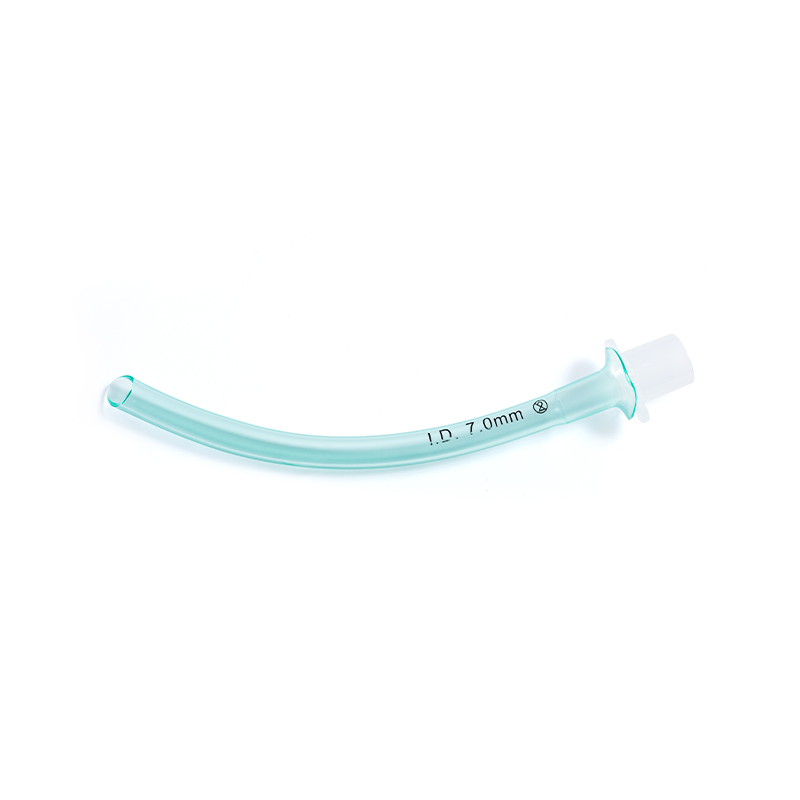
A nasopharyngeal airway is a soft, curved tube with a flared flange at the nasal end and a beveled tip at the pharyngeal end. Once inserted, it acts as a mechanical splint: the tongue, soft palate, and surrounding soft tissues cannot collapse against the posterior pharyngeal wall, which keeps the upper airway open during spontaneous breathing.
Most NPAs are made of medical-grade PVC or silicone. PVC offers enough wall stiffness to splint tissue while remaining flexible enough to follow the nasal passage. Silicone versions are softer and may be more comfortable for longer use. Pediatric sizes follow the same design but use smaller diameters, and the same nose-to-earlobe measurement applies. Because the NPA is an invasive adjunct with direct mucosal contact, a sterile, single-use device is the standard of care in emergency and perioperative settings.
For teams evaluating equipment, the single-use nasopharyngeal airways used in prehospital and hospital practice should have clear size markings, a smooth bevel, and a flange that prevents the tube from disappearing into the nostril. They belong within a broader anesthesia and airway management product portfolio that also covers endotracheal tubes, laryngeal masks, and related accessories.
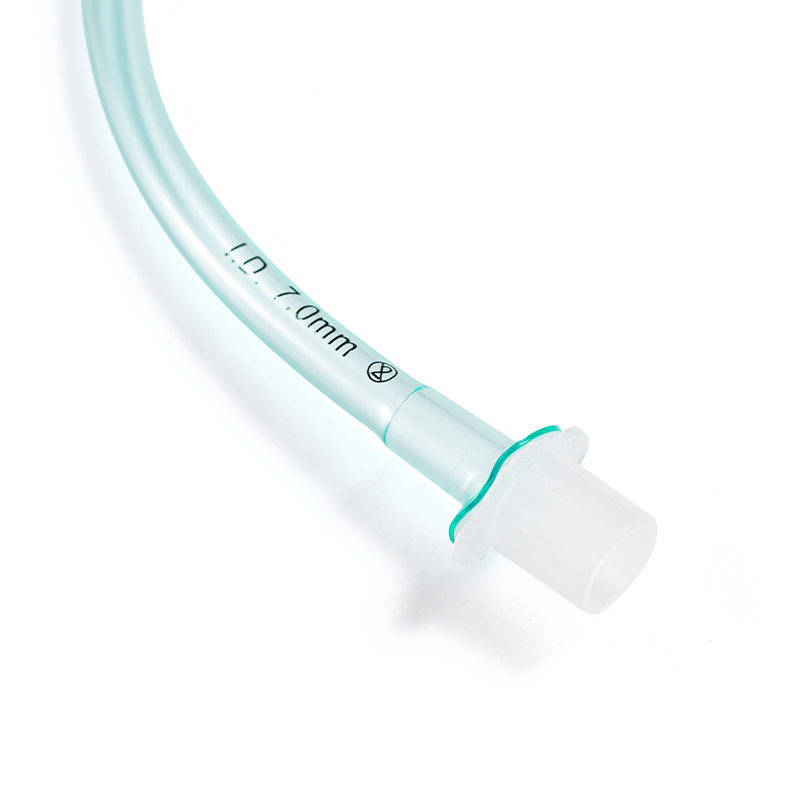 Single-Use Nasopharyngeal Airway Suppliers, Custom Factory - Zhejiang Sungood TeSungood is China Single-Use Nasopharyngeal Airway Suppliers and Custom Single-Use Nasopharyngeal Airway Factory,Main IndicationsNasophary...View Product →
The NPA is not the first choice in every airway emergency, but it is the best choice in several specific situations:
The most serious contraindication is suspected basilar skull fracture, which can be suggested by raccoon eyes, Battle's sign, or cerebrospinal fluid leaking from the nose or ears. In this setting, an NPA can pass through the fracture and enter the cranial cavity. Severe midface trauma and known nasal obstruction are also reasons to avoid the device or use it with extreme caution.
One common misconception is that the NPA can stabilize fractured nasal bones if it is inserted properly. It cannot. The device is too soft to act as a splint, and inserting it into a traumatized nasal passage can worsen bleeding and create a false channel. Nasal fracture or significant nasal deformity is a relative contraindication, and the device should be avoided unless the benefit clearly outweighs the risk.
The most common complication is epistaxis, because the nasal mucosa is highly vascular. Mucosal injury, laryngospasm, and pressure necrosis can also occur, especially with an oversized tube or forced insertion. Choosing the correct size, applying generous lubrication, and advancing gently reduce the risk of these problems.
Neither device ventilates the patient. Both are adjuncts that keep the upper airway open while the patient breathes spontaneously. The clinical decision depends on the level of consciousness and the presence of protective reflexes.
| Feature | Nasopharyngeal Airway (NPA) | Oropharyngeal Airway (OPA) |
|---|---|---|
| Best patient state | Semiconscious or unconscious with intact gag reflex | Deeply unconscious without a gag reflex |
| Gag reflex tolerance | Well tolerated | Poor; can cause vomiting and aspiration |
| Insertion route | Nasal passage | Oral cavity |
| Main contraindication | Suspected basilar skull fracture | Intact gag reflex |
| Most common complication | Epistaxis | Oral or dental trauma |
| Use during spinal precautions | Safely inserted with minimal neck movement | Requires care but also minimal neck movement |
| Suctioning access | Provides a pharyngeal conduit | No effective conduit |
When the patient is deeply unconscious and has no gag reflex, an OPA is faster and easier to insert. When the gag reflex is present or the patient is only semiconscious, the NPA is clearly safer. When the level of consciousness is uncertain, the NPA carries the lower risk of provoking vomiting.
Correct sizing is essential. The length of the NPA should equal the distance from the tip of the nose to the earlobe, and the diameter should approximate the patient's little finger or the opening of the nostril. Adult internal diameters typically range from 6.0 to 9.0 mm. A tube that is too short fails to splint the tongue; one that is too long can enter the larynx or esophagus, causing laryngospasm or hypoxemia.
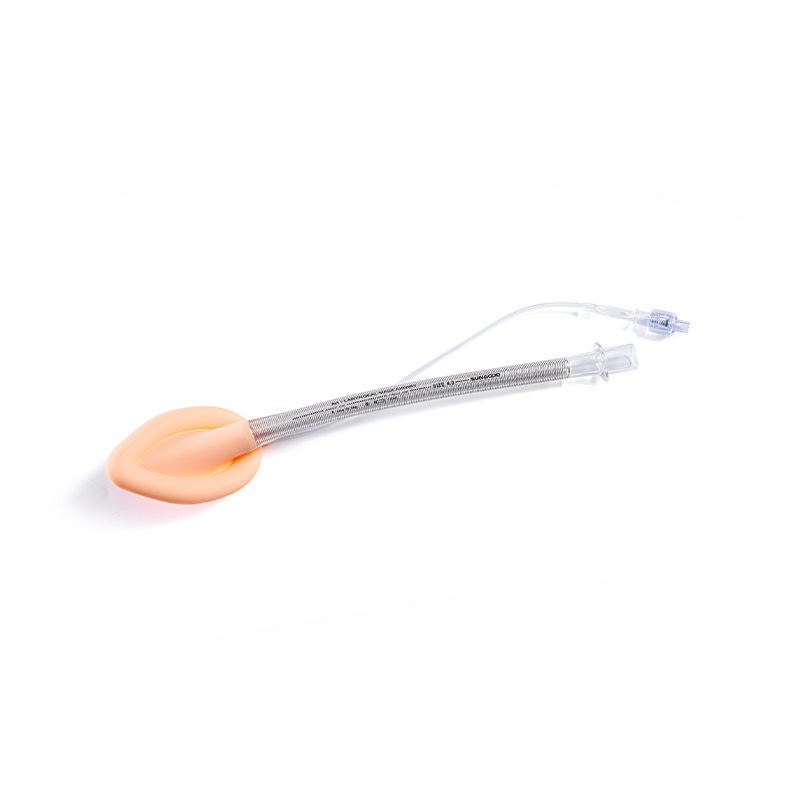
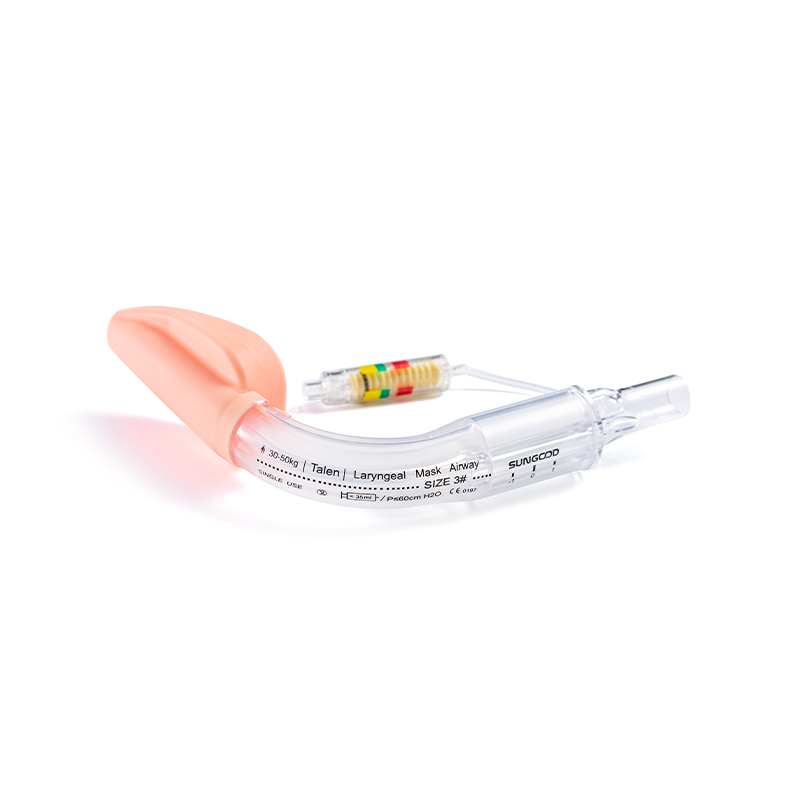
The NPA does not provide positive-pressure ventilation. It only preserves a passage for spontaneous breathing. If the patient becomes apneic, needs ventilatory support, or has severe maxillofacial trauma, the team must escalate to a supraglottic device or an endotracheal tube. In those situations, selecting the right device and size is just as important as the initial NPA decision. Teams that want to review device selection options can consult this laryngeal mask airway sizing and safety guide.
The nasopharyngeal airway is most beneficial because it maintains a patent airway in a semiconscious patient with a gag reflex. It does what an oropharyngeal airway cannot: it supports the airway through the nasal route without provoking the protective reflexes that lead to vomiting and aspiration. For this reason, it belongs in every emergency airway kit, ambulance, and resuscitation cart.
For procurement teams, the practical requirements are straightforward: sterile single-use packaging, medical-grade PVC or silicone, a full range of sizes with clear markings, and a flange design that prevents migration into the nostril. Manufacturing quality also matters. Suppliers that produce under ISO 13485 and hold CE certification for their airway devices give purchasers a documented level of assurance. If you are evaluating supply options, request product specifications and samples from the manufacturer so the device can be tested in your own clinical environment.
Product Categories
Contact Us

+86-571-87687066
+86-18106505367

Workshop 1, 1st Floor(Zone B), 3rd Floor; Office Building 3rd&4th Floors, No. 550 Yinhai Street, Baiyang Sub-district, Qiantang District, Hangzhou City, Zhejiang Province, P.R.China
Ready to Begin?
Get in Touch

Now!

sungood

 English
 Español