Industry Knowledge
Endoscopy Accessories Selection and Workflow Integration
Choosing the right Endoscopy Accessories is not merely about compatibility with the endoscope model; it involves a holistic assessment of procedural workflow, sterility assurance, and tactile performance. In high-volume endoscopy units, accessories that reduce setup time and eliminate re-sterilization steps directly translate to increased throughput and reduced operational costs. Items such as pre-sterilized biopsy valves, single-use irrigation channels, and disposable injection needles allow staff to open, deploy, and discard without the logistical overhead of central sterile supply reconciliation.
At SUNGOOD, we engineer our supporting consumables to integrate seamlessly into existing procedural workflows. As Endoscopy Accessories Manufacturers with nearly two decades of experience, we understand that even a minor delay in accessory deployment can disrupt the rhythm of a complex interventional case. Our sterile packaging protocols ensure that every item is ready for immediate use, eliminating the variable of cross-contamination risk and allowing the clinical team to maintain focus on patient outcomes.
Key Considerations for Accessory Selection
- Sterility validation: Verify that the accessory carries a validated sterility assurance level (SAL) of 10⁻⁶, which is the standard for critical medical devices.
- Ergonomic interface: The accessory should provide tactile feedback during tissue engagement, enabling the endoscopist to distinguish between mucosal layers and submucosal targets.
- Channel compatibility: Confirm inner diameter and length specifications to prevent friction-induced resistance or channel obstruction during instrument passage.
- Material biocompatibility: Select accessories manufactured from medical-grade polymers or stainless steel that meet ISO 10993 standards for cytotoxicity and sensitization.
Sterile Packaging and Cross-Contamination Prevention in Endoscopy
The transition from reusable to disposable Endoscopy Accessories represents one of the most significant infection control advancements in modern gastroenterology. Reusable accessories, despite rigorous high-level disinfection protocols, carry a residual risk of biofilm persistence and prion transmission. Single-use sterile accessories eliminate this vector entirely, provided the packaging integrity is maintained from manufacture to point of use.
Packaging design plays a critical role in maintaining sterility. Peel-open pouches with chevron seals allow aseptic presentation, while Tyvek-lidded trays provide puncture resistance during transport. The shelf-life of sterile accessories is determined by the barrier properties of the packaging material; accelerated aging studies typically validate a three-year shelf life when stored in controlled environments (temperature 15–25°C, relative humidity 30–60%).
Packaging Integrity Checkpoints
| Checkpoint |
Inspection Criteria |
Action if Failed |
| Visual seal inspection |
No gaps, wrinkles, or delamination along seal perimeter |
Reject and return to supplier |
| Label legibility |
Lot number, expiration date, and sterility indicator clearly visible |
Quarantine for traceability review |
| Physical integrity |
No punctures, tears, or moisture ingress in barrier material |
Discard immediately; do not use |
| Chemical indicator |
Color change confirms exposure to sterilizing agent (EO or gamma) |
Isolate batch; initiate failure investigation |
Table: Sterile packaging inspection protocol for single-use endoscopy accessories
We at Zhejiang Sungood Technology implement a redundant packaging validation process. Every batch undergoes bubble leak testing and dye penetration assays before release. This diligence is why our Endoscopy Accessories Factory maintains a defect rate below 0.05% across all sterile product lines.
Biopsy Valves and Irrigation Systems: Functional Design and Clinical Performance
Biopsy valves serve as the dynamic seal between the endoscope instrument channel and the external environment. A well-designed valve must simultaneously prevent insufflation gas leakage, allow smooth instrument insertion with minimal friction, and accommodate devices ranging from 1.8 mm to 3.2 mm in diameter without compromising seal integrity. Silicone elastomer valves with variable durometer zones offer an optimal balance: softer distal lips reduce tissue trauma during instrument advancement, while firmer proximal sections maintain structural stability under repeated instrument exchanges.
Irrigation tubes and channels represent another critical category of Endoscopy Accessories. In therapeutic endoscopy, continuous irrigation maintains a clear optical field during hemostasis or polypectomy. The flow rate is determined by tubing inner diameter and pump pressure; typical clinical requirements range from 200 mL/min to 500 mL/min for standard diagnostic procedures, escalating to 1 L/min for lithotripsy or debris clearance in cholangioscopy.
Design Parameters for High-Performance Valves
- Material resilience: Silicone or thermoplastic elastomer (TPE) with >400% elongation at break to withstand repeated puncture without tearing.
- Self-sealing geometry: Cross-slit or duckbill configurations that close passively when instruments are withdrawn, maintaining pneumoperitoneum or gastric insufflation.
- Compatibility matrix: Validation across all major endoscope brands (Olympus, Fujifilm, Pentax) to ensure universal fit without adapter requirements.
- Particulate filtration: Integrated mesh screens (typically 100–150 μm) to prevent biopsy fragments or clot debris from entering the suction channel.
Our engineering team at SUNGOOD continuously refines these parameters based on feedback from clinical partners. We believe that the smallest component—whether a biopsy valve or an irrigation adapter—should never be the limiting factor in procedural success.
Supply Chain Reliability and Quality Consistency in Endoscopy Accessories Wholesale
For hospitals and ambulatory surgery centers, Endoscopy Accessories Wholesale procurement is not simply a volume-discount transaction; it is a strategic partnership that demands supply chain resilience and batch-to-batch consistency. Disruptions in accessory availability can force procedural cancellations, with downstream effects on patient wait times and revenue cycle management. A robust wholesale relationship should therefore include defined safety stock agreements, lot traceability protocols, and contingency manufacturing capacity.
Quality consistency is quantified through process capability indices. A Cpk value ≥ 1.33 indicates that the manufacturing process is statistically capable of producing accessories within specification limits with minimal defect probability. For critical dimensions—such as biopsy valve inner diameter or snare wire loop closure tolerance—Cpk targets should exceed 1.67 to ensure Six Sigma-level reliability.
Evaluating a Wholesale Partner
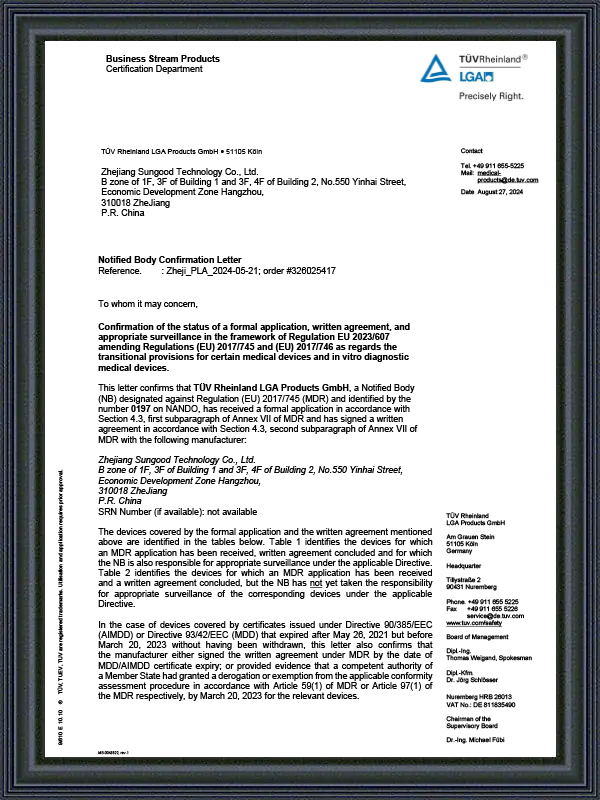
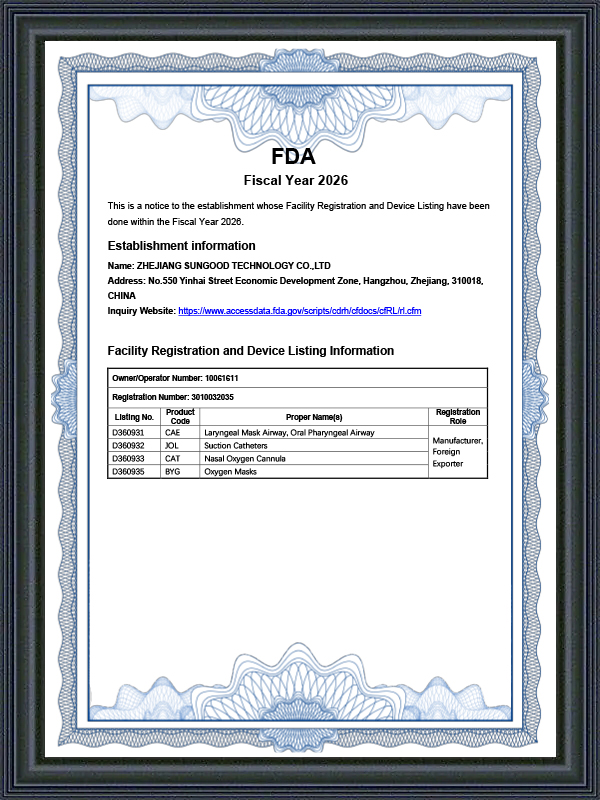
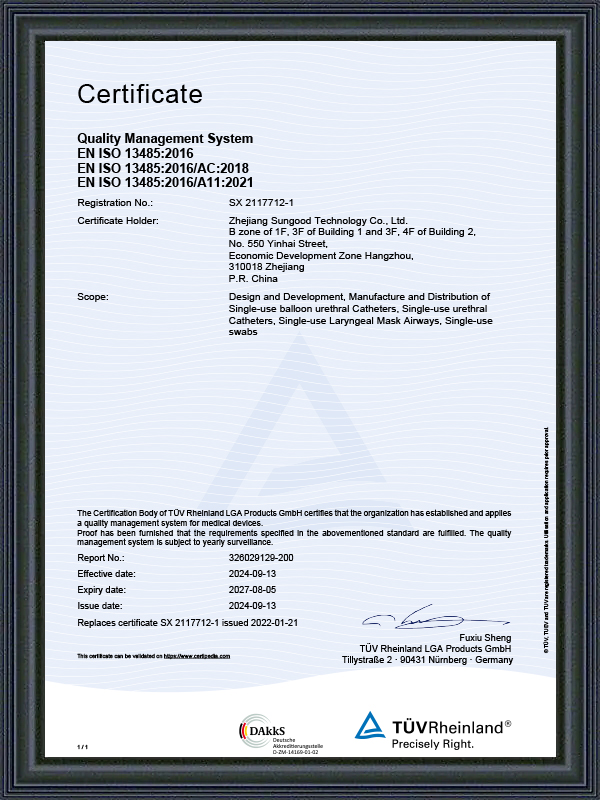
- Regulatory footprint: Confirm that the manufacturer holds valid ISO 13485 certification and FDA registration (or equivalent CE marking) for the specific accessory categories supplied.
- Lot traceability: Each production lot should be traceable to raw material certificates, sterilization validation records, and release testing data.
- Change control: The supplier must notify the hospital of any material, process, or design changes with sufficient lead time for re-validation.
- Lead time stability: Evaluate the coefficient of variation (CV) in delivery lead times over the past 12 months; a CV below 15% indicates predictable logistics.
Zhejiang Sungood Technology operates with a vertically integrated manufacturing model, controlling everything from polymer extrusion to final sterile packaging. This integration is why we can offer our Endoscopy Accessories Wholesale partners not only competitive pricing but also the assurance that every lot meets the same exacting standards—because when a clinician opens a SUNGOOD package, the performance must be identical to the one they opened last month, last year, or five years ago.

 English
 Español