
Home / News / Industry News / How to Insert an Oropharyngeal Airway: Sizing, Insertion Technique, and Checks
Content
An oropharyngeal airway (OPA) fails for one of three reasons: the wrong size, the wrong head position, or the wrong path around the tongue. In practice the third cause is the most common, and it is the easiest to fix. An adult OPA inserted with its curve the wrong way round sweeps the tongue back into the pharynx and can turn a partly obstructed airway into a completely blocked one. Measure the device against the jaw, extend the head unless the cervical spine says otherwise, and let the tip travel over the tongue rather than under it. Done that way, the airway seats in seconds and holds a clear channel between the teeth and the posterior pharyngeal wall.
Everything below is the detail behind that summary: how to confirm the patient has no gag reflex, which size to pick, why the rotational technique suits adults, when a tongue blade is safer, and what to do when the first attempt does not move air.
An OPA is a bite block and a breathing channel, nothing more. It holds the tongue away from the posterior pharyngeal wall in an unconscious patient and gives you a route for suction. It does not seal the trachea, does not protect against aspiration, and does not ventilate anyone on its own.
Check these points before you touch the mouth:
If the patient gags, stop. Forcing an OPA past an intact gag reflex causes retching, vomiting, aspiration, and occasionally laryngospasm. A patient who gags usually needs a nasal airway or a supraglottic device, not a larger oral one.
The oral route is also a poor choice in trismus, severe maxillofacial or mandibular trauma, recent oral surgery, and caustic ingestion. Those are not limitations of the device; they are limitations of the doorway.
Size the airway on the patient, not on the packet. Place the flange at the corner of the mouth and lay the body of the device along the jaw line. The tip should reach the angle of the mandible, roughly below and slightly behind the earlobe. In adults that single measurement is more reliable than estimating from weight or height.
Both directions of error cause trouble:
The flange is your cross-check. A correctly seated OPA rests against the lips and incisors rather than floating in front of them.
| Size | Approximate length | Typical patient |
|---|---|---|
| 000 | 40 mm | Neonate |
| 00 | 50 mm | Infant |
| 0 | 60 mm | Small child |
| 1 | 70 mm | Child |
| 2 | 80 mm | Small adult |
| 3 | 90 mm | Average adult |
| 4 | 100 mm | Large adult |
| 5 | 110 mm | Very large adult |
Work from the head of the bed rather than from the side, so the flange ends up sitting where you can see it. Suction blood, vomit, or secretions first; an OPA will not correct a blocked lumen, and pushing debris downwards only creates a bigger problem. Bring the head into a sniffing position, with slight flexion of the lower neck and extension at the upper neck, so the external ear canal is roughly level with the sternal notch.
If you suspect a cervical spine injury, keep manual in-line stabilisation and use a jaw thrust to pull the tongue forward instead of tilting the head. Where a supraglottic device or a tracheal tube may follow, pre-oxygenate with a bag-valve-mask before inserting the OPA. A patient who arrives with saturations in the low eighties needs oxygen, not a plastic tube.
Rotating too early is the classic error. If the tip is still on the hard palate when you twist, the edge scrapes the mucosa and the airway comes back bloodstained. If that happens, withdraw, suction, improve the head position, and start again.
Lift the tongue forward with a tongue depressor or the blade of a laryngoscope, then insert the OPA the right way up, following the natural curve of the palate. No rotation is needed, which is why this is the usual approach in infants and small children; a soft palate is easy to injure with a twisting movement. Whichever technique you choose, never force the device. Fixed resistance means the tip is against tissue, so withdraw a centimetre, oxygenate, and reassess before trying again.
If ventilation does not improve, resist the urge to reach for a bigger airway. Withdraw the OPA one or two centimetres and ventilate again; a device that is too long often obstructs precisely because its tip is pressing the epiglottis down. Then re-measure and re-insert, or change route entirely.
Once the airway is working, secure the flange with tape or a tie, note the size used, and record the time. A patient can bite down or roll and displace an unsecured OPA within minutes.
Most of these are technique errors rather than equipment problems, and most become obvious within seconds of the first ventilation attempt.
The nasopharyngeal airway is the practical alternative when the mouth cannot be opened, when oral trauma or trismus blocks access, or when a patient tolerates a nasal device but gags on an oral one. It is passed along the floor of the nasal cavity, perpendicular to the face, with lubricant, and it should sit with its flange at the nostril. Avoid it if you suspect a basal skull fracture or a severe midface injury.
Having both routes on the trolley matters more than most checklists admit. A single-use nasopharyngeal airway designed for airway management work is a sensible item to stock alongside oral airways, so the decision stays clinical rather than logistical.
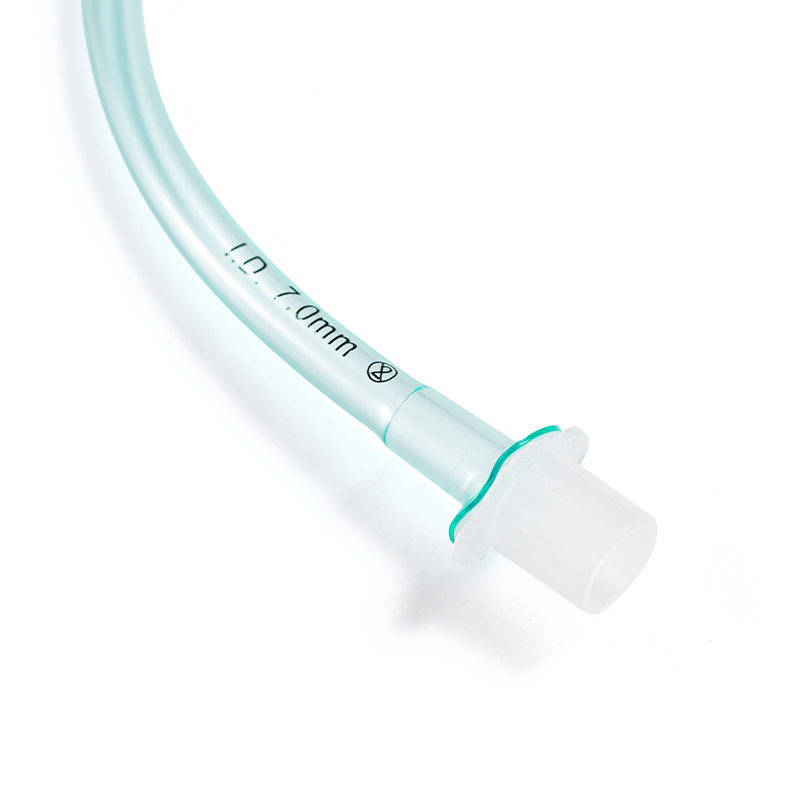 Single-Use Nasopharyngeal Airway for Upper Airway ManagementDisposable NPA for relieving upper airway obstruction and supporting ventilation in spontaneously breathing patients when an oral airway cannot be used.View Product →
An OPA keeps a passage open; it does not seal the larynx. If the patient needs positive-pressure ventilation, a higher inspired oxygen concentration, or a route that resists gastric insufflation, the next step is a supraglottic airway or a tracheal tube.
Sizing landmarks change completely at that point, because supraglottic devices are matched to body weight and cuff volume rather than the mouth-corner-to-jaw-angle distance, so review the sizing and insertion guidance for supraglottic airways before you open a new package.
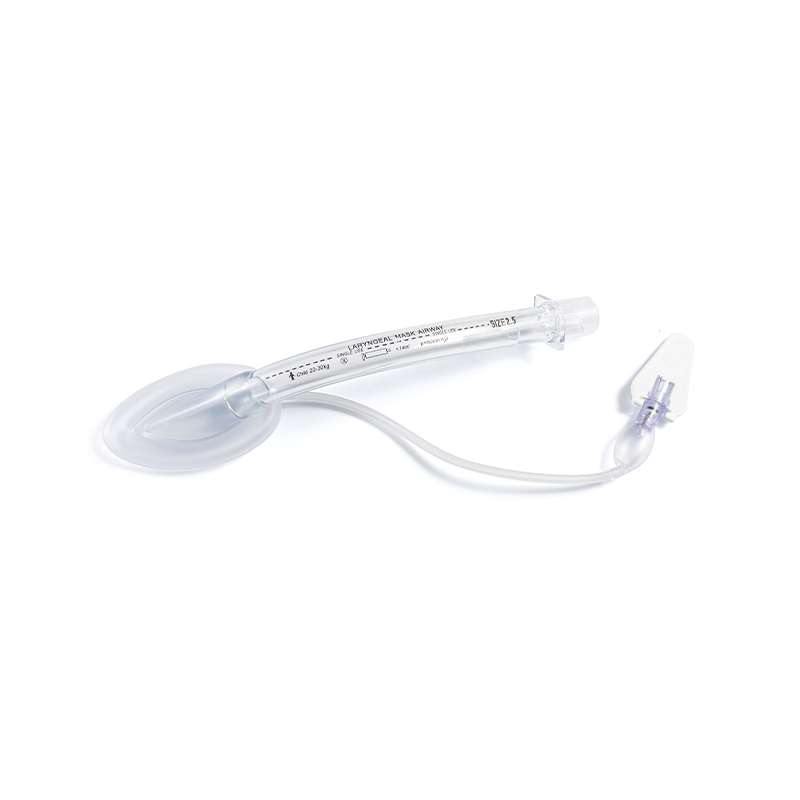
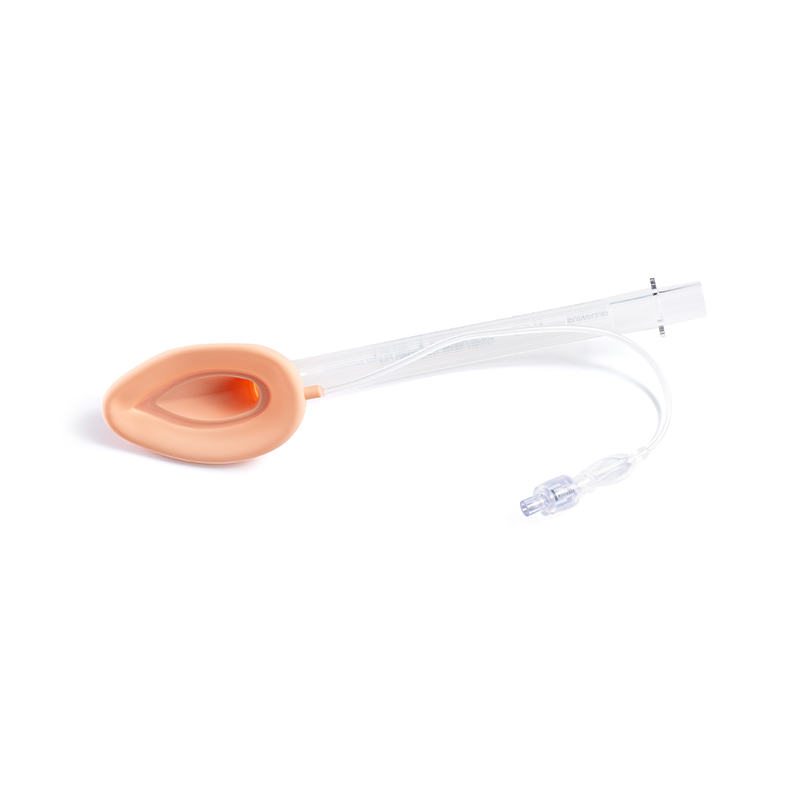
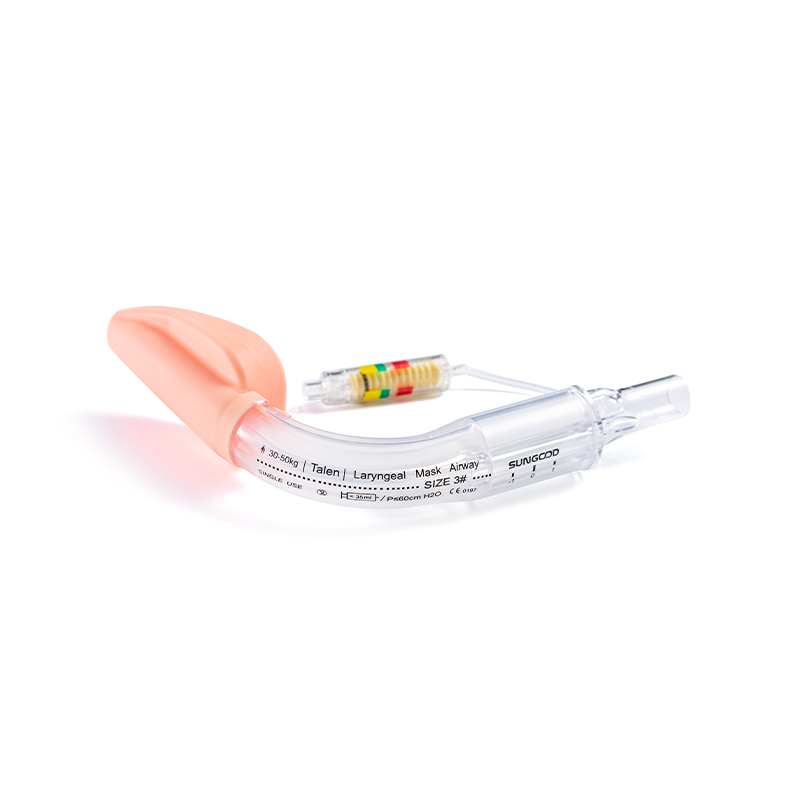
A standard silicone laryngeal mask airway, for instance, depends on a soft cuff that conforms to the pharyngeal shape and holds a low-pressure seal, which is a different job from the rigid channel an OPA provides.
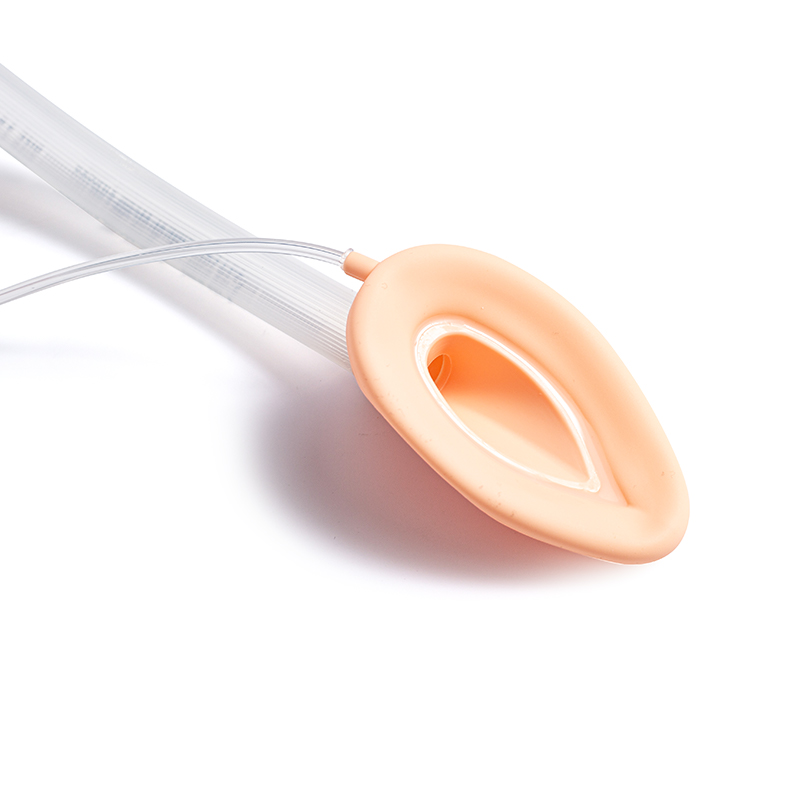 Standard Silicone Laryngeal Mask Airway for Anesthesia and ResuscitationMedical-grade silicone supraglottic airway for rapid temporary ventilation support during general anesthesia, emergency resuscitation, and intensive care, with size options.View Product →
Remove the OPA when the patient starts to gag, coughs purposefully, or follows commands. Suction before removal, because the tongue frequently falls back the moment the device comes out, especially in someone who is not fully awake. Reassess the airway immediately and keep suction and a bag-valve-mask within reach. Record the size used, the time of insertion and removal, and the reason the airway was needed. That short note is often the only evidence a colleague has when the patient reaches the emergency department or the intensive care unit.
Two habits separate a clean insertion from a difficult one. Measure every patient against their own jaw instead of guessing from the packaging, and keep the sizes you actually stock within arm's reach, so you are choosing between 80, 90, and 100 mm rather than whatever happens to be on top of the trolley. If you are equipping a department, an ambulance, or a training room and want to talk through which airway products belong on the shelf, contact our team and we will work through it with you.
Product Categories
Contact Us

+86-571-87687066
+86-18106505367

Workshop 1, 1st Floor(Zone B), 3rd Floor; Office Building 3rd&4th Floors, No. 550 Yinhai Street, Baiyang Sub-district, Qiantang District, Hangzhou City, Zhejiang Province, P.R.China
Ready to Begin?
Get in Touch

Now!

sungood

 English
 Español