
Home / News / Industry News / Types of Oral Airways: OPA Sizes, Materials, Insertion, and Selection Guide
Content
An oral airway is a simple-looking device, but the wrong type or size can push the tongue back instead of lifting it. In a perioperative or emergency setting, the choice usually comes down to four questions: Is the patient deeply unconscious enough to tolerate an oropharyngeal device? Is a bite block needed? Does the procedure require a channel for suction or tube passage? And is the available size appropriate for the patient's mouth-to-angle distance? The practical answer is that ordinary Guedel and Berman airways cover most basic obstruction cases, while Williams, Robertazzi, and intubating oral airways serve narrower procedure-specific roles. The rest of this guide explains those differences and the checks that matter at the bedside and in procurement.
An oral airway, also called an oropharyngeal airway or OPA, sits in the mouth and extends toward the posterior pharynx. Its main job is to displace the tongue from the posterior pharyngeal wall. It does not seal the larynx, protect against aspiration, or replace bag-mask ventilation or tracheal intubation. That distinction matters because an OPA can improve patency while the patient remains at risk of regurgitation or obstruction below the device.
OPAs are usually made of medical-grade PVC or silicone, supplied sterile or non-sterile for single use, and marked by size. They are intended for patients without a reliable gag reflex. Inserting one in an awake or lightly sedated patient can cause gagging, vomiting, laryngospasm, or dental injury.
The Guedel airway is the familiar curved OPA with a tubular body and a flange at the lips. The flange limits insertion depth and helps prevent the device from disappearing into the mouth. A central channel can accept a suction catheter. Guedel airways are available in PVC and silicone; rigid PVC versions are common for single-use emergency and anesthesia use, while softer silicone options may be chosen for specific protocols. They are not designed as a conduit for endotracheal tubes.
The Berman oral airway uses two lateral rails connected by a central bite block rather than a full tube. Its open-sided design allows the tongue to sit between the rails and gives access for suction. Some clinicians prefer it when secretions are heavy or when a tube-shaped OPA might become blocked. The trade-off is that the open structure can be less protective against biting and may be less suitable when a closed channel is needed.
The Williams airway is a side-channel OPA with a bite block and a relatively large internal lumen. It is often found in anesthesia and emergency airway kits. Its design can make suction and fiberoptic access easier than a standard Guedel, but the internal diameter and tube compatibility vary by manufacturer. Check the label before using it as an intubation conduit.
The Robertazzi airway is a variant with a bite block and a channel that can be used for suction or as a guide. It is less common than Guedel and Berman designs, so availability and staff familiarity may be limited. In a hospital setting, standardization matters: a less familiar device can slow insertion during a crisis.
Intubating OPAs are purpose-built conduits for tube passage. The Ovassapian airway has a split, open channel that allows a tube or bronchoscope to be loaded and then released. The Berman intubating airway uses an open or hinged design, while Williams intubating airways and Cookgas-type devices vary in channel shape and tube compatibility. These devices are not routine bite blocks; they are chosen when fiberoptic or blind oral intubation is planned and the operator has confirmed that the selected tube fits the channel.
| Type | Structure | Typical role | Practical limitation |
|---|---|---|---|
| Guedel | Curved tube with flange and central channel | Basic tongue displacement; suction access | Not an intubation conduit; can provoke gag if too light |
| Berman | Two lateral rails with central bite block | Suction access; heavy secretions | Open sides offer less bite protection |
| Williams | Side-channel OPA with bite block | Anesthesia and emergency airway kits | Tube fit varies by manufacturer |
| Robertazzi | Bite block with channel or guide | Suction or guided access | Less familiar and less widely stocked |
| Intubating OPA | Split or open channel for tube passage | Fiberoptic or planned oral intubation | Requires confirmed tube compatibility |
OPA size is not interchangeable. A common bedside estimate is to hold the airway beside the patient's face with the flange at the corner of the mouth and the tip at the angle of the mandible or earlobe. If the device is too small, it may not reach past the tongue and can worsen obstruction. If it is too large, it may push the epiglottis, provoke gagging, or cause trauma. Pediatric and adult sizes are usually color-coded or marked in millimeters, but color codes are not universal across manufacturers.
Before insertion, inspect the device for cracks, rough edges, and a secure flange. Lubricate the tip with a water-soluble lubricant if local protocol allows. Open the mouth with a crossed-finger or jaw-thrust technique, insert the OPA in the orientation recommended by the manufacturer, and rotate it into position once the tip passes the teeth. Do not force against clenched teeth. Confirm placement by observing chest rise with ventilation, listening for air movement, and checking that the flange sits at the lips. Reassess after position changes, suctioning, or patient movement.
When mouth opening is limited or an oral device is poorly tolerated, a nasopharyngeal airway may be considered. It is not an oral airway and has its own contraindications, including suspected basilar skull fracture, severe epistaxis, and coagulopathy. If your formulary includes nasal airways, SUNGOOD's single-use nasopharyngeal airway is listed in the airway management range.
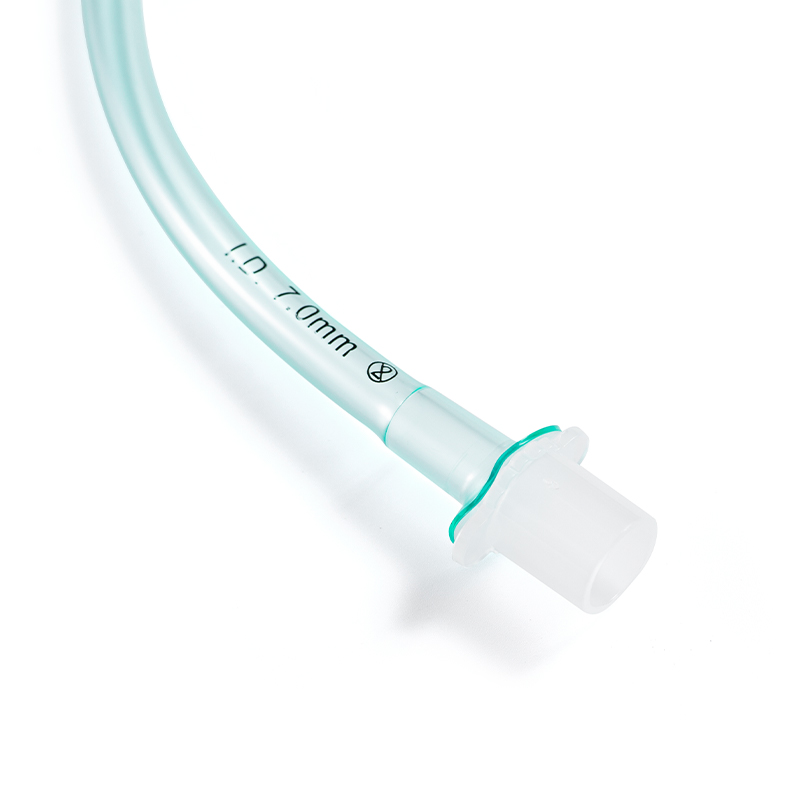 Single-Use Nasopharyngeal Airway for Limited Mouth OpeningDisposable NPA supports upper airway patency when oral airways are poorly tolerated or mouth opening is limited, with multiple sizes for adults, children, and infants.View Product →
Most oral airways are single-use devices. Reusable versions exist in some markets, but in facilities with high turnover, reprocessing introduces cleaning validation, drying, and storage risks. For single-use OPAs, check:
A cheap OPA that kinks, has sharp edges, or lacks a reliable size mark creates avoidable clinical risk. For buyers, request samples from the same production lot, check dimensional consistency, and confirm that the channel diameter matches the tubes or suction catheters used in your department. SUNGOOD's respiratory and anesthesia range includes airway management devices produced under a 100,000-class GMP cleanroom and ISO 13485 certification for most products; the oral airway selection still depends on the checks above.
Use a Guedel or Berman as the default rescue OPA when the goal is simple tongue displacement and suction access. Choose Williams or Robertazzi only if your team is trained and the device's channel adds clear value. Reserve intubating OPAs for planned fiberoptic or oral intubation, and verify tube fit before the case. In all cases, treat the OPA as a temporary adjunct: if ventilation is inadequate, move to bag-mask ventilation, a supraglottic airway, or tracheal intubation according to the algorithm and the patient's condition.
The best oral airway is the one that fits, stays in place, and matches the procedure. If you need size samples, dimensional data, or a quote for airway management consumables, contact the team with your clinical requirements.
Product Categories
Contact Us

+86-571-87687066
+86-18106505367

Workshop 1, 1st Floor(Zone B), 3rd Floor; Office Building 3rd&4th Floors, No. 550 Yinhai Street, Baiyang Sub-district, Qiantang District, Hangzhou City, Zhejiang Province, P.R.China
Ready to Begin?
Get in Touch

Now!

sungood

 English
 Español