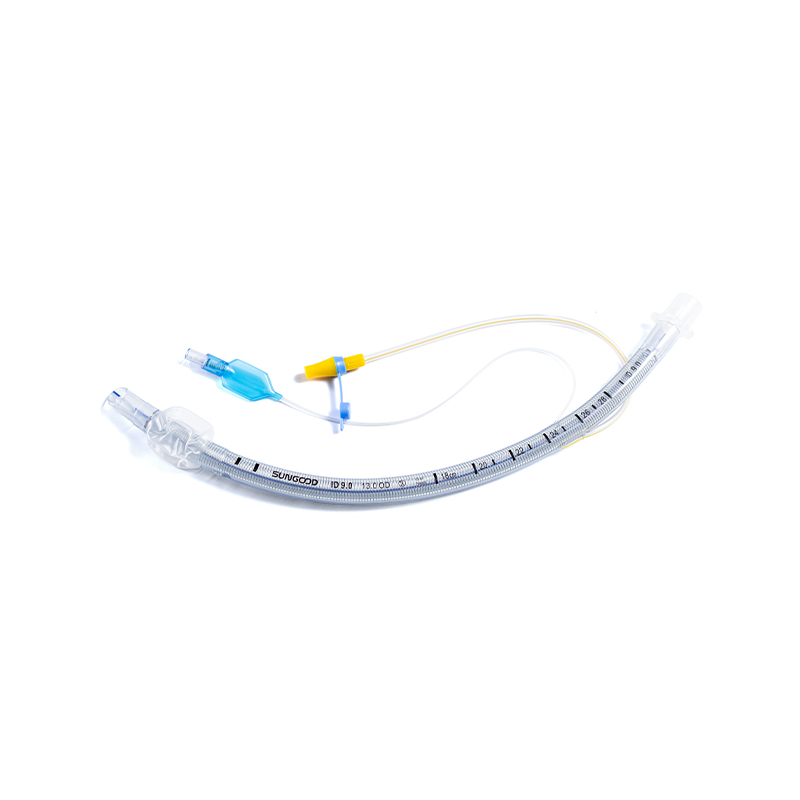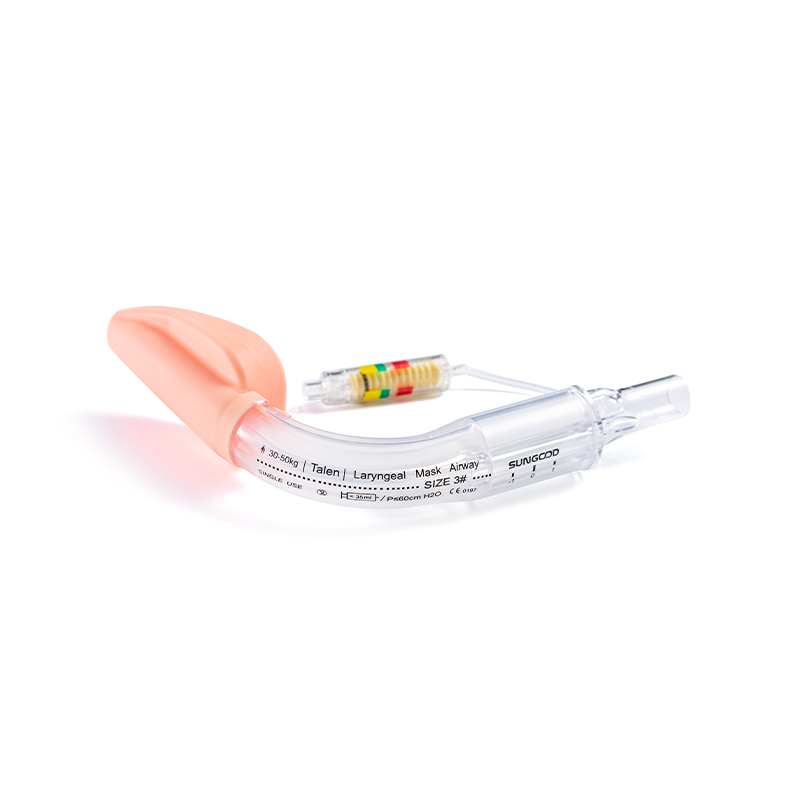

Home / News / Industry News / The overlooked "window of life safety": airway cuff pressure. Why should it be taken seriously in every surgery and every ICU?
Content
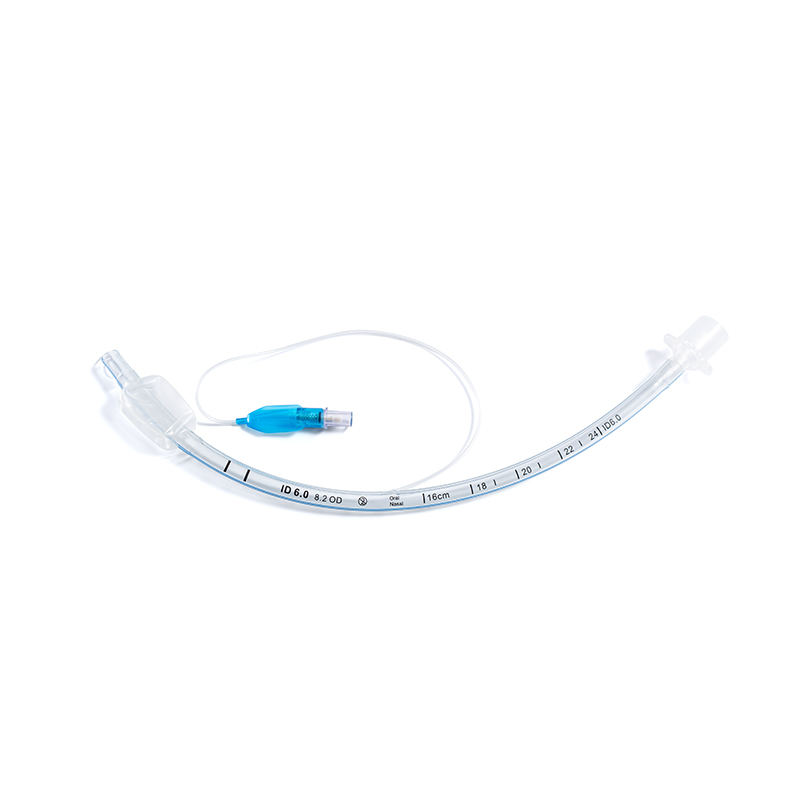
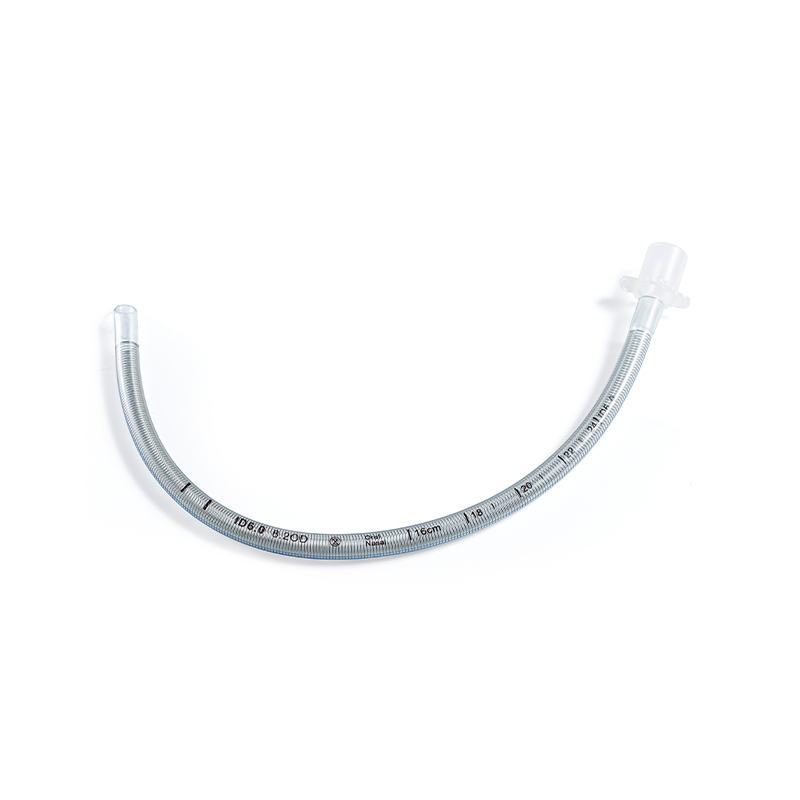
In the operating room, anesthesiologists focus on smooth induction and adequate muscle relaxation. In the ICU, clinicians monitor tidal volume, PEEP, and oxygen saturation. Yet one parameter — directly linked to whether a patient aspirates, develops ventilator-associated pneumonia (VAP), or experiences painful, voice-robbing sore throat after extubation — is still often assessed by "pinching the pilot balloon" with a finger.
That parameter is endotracheal tube cuff pressure.
Cuff pressure is not a matter of "higher is safer" or "lower is safer" — it has a precise safety window.
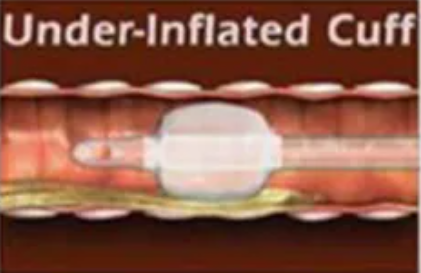
Too low (<25 cmH₂O): A gap forms between the cuff and the tracheal wall, allowing oral secretions and refluxed gastric contents to leak into the lower airway. This microaspiration is the leading route of infection for VAP.
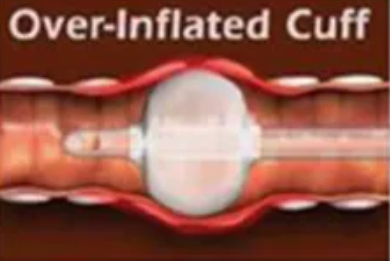
Too high (>30 cmH₂O): The cuff compresses the tracheal mucosa, reducing capillary blood flow. Above 50 cmH₂O, blood flow is completely obstructed; prolonged exposure can cause mucosal ischemia and necrosis, and in severe cases, tracheoesophageal fistula.
The window that avoids both leakage and pressure injury is 25–30 cmH₂O.
This is not just clinical intuition — it is backed by explicit guideline recommendations:
The supporting data is striking: studies show that during the first 8 days after intubation, patients whose cuff pressure fell below 20 cmH₂O had a markedly higher aspiration rate, making low cuff pressure an independent risk factor for VAP (RR = 4.23).[1]
Knowing the target number "25–30" is easy. Keeping pressure inside that range continuously is not.
Cuff pressure is affected by numerous factors — changes in patient position, coughing, suctioning, ventilator parameter adjustments, even changes in altitude — so pressure is constantly fluctuating. Traditional manual pressure measurement has two inherent limitations:
Measurement itself causes leakage: Each time the pilot balloon valve is connected for measurement, cuff pressure drops by roughly 2 cmH₂O, which is why clinicians are advised to add "2 extra cmH₂O" after measuring to compensate — itself an admission of imprecision.[1]
Intervals are too long: Consensus guidelines recommend manual measurement every 6–8 hours when no automated device is used.[1] But between two measurements, pressure may have already drifted well outside the safe range.
In one study monitoring 101 ICU patients continuously over 8 hours, cuff pressure remained within the 25–30 cmH₂O target range only 18% of the time.[1]
In other words, even when staff strictly follow the protocol of measuring every 8 hours, patients are still exposed to abnormal cuff pressure for more than 80% of the day.
"Continuous vs. intermittent monitoring" is not a theoretical debate — it has been addressed by a substantial body of high-quality clinical research.
A meta-analysis of 7 randomized controlled trials involving 986 patients found that continuous cuff pressure monitoring kept pressure stably within 25–30 cmH₂O, while also producing favorable effects on VAP incidence, aspiration incidence, and length of hospital stay.[4]
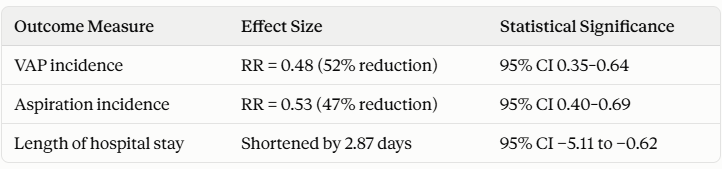
A separate meta-analysis published in the Chinese Journal of Critical Care Medicine reached a consistent conclusion: the continuous-monitoring group showed a significantly lower VAP incidence (OR = 0.43, 95% CI 0.31–0.60, P < 0.05).[5]
A balanced note: Several large multicenter RCTs did not find a significant reduction in VAP incidence with continuous electronic devices — for example, a 600-patient trial in Vietnam (Dat et al., CID 2021)[9] and a multicenter RCT in French trauma patients (Marjanović et al., Chest)[10]. Researchers suggest these mixed results may relate to device type (electronic vs. pneumatic), patient population characteristics, and how rigorously baseline VAP-prevention bundles were implemented. Overall, however, the pooled evidence from meta-analyses tends to favor continuous monitoring for reducing VAP and aspiration, particularly in settings where manual measurement is not consistently performed.
The value of cuff pressure management extends beyond the ICU. For patients under general anesthesia, abnormal cuff pressure directly contributes to postoperative sore throat (POST), hoarseness, and coughing — complications with a reported incidence of 30%–70%, and a major driver of poor postoperative experience and satisfaction.
Multiple clinical studies confirm the postoperative benefits of precise pressure management:
For the operating room, cuff pressure management is not merely a safety baseline — it is a meaningful contributor to anesthesia quality control and patient experience.
Clinical consensus has already pointed the way forward: automated inflation pumps may be used to maintain cuff pressure (Grade B recommendation).[1]
With the upcoming implementation of the new national standard WS/T 863—2025, VAP prevention is moving from "recommended practice" to "mandatory standard." Continuous, precise, and traceable cuff-pressure management is becoming an essential requirement in both the ICU and the operating room.
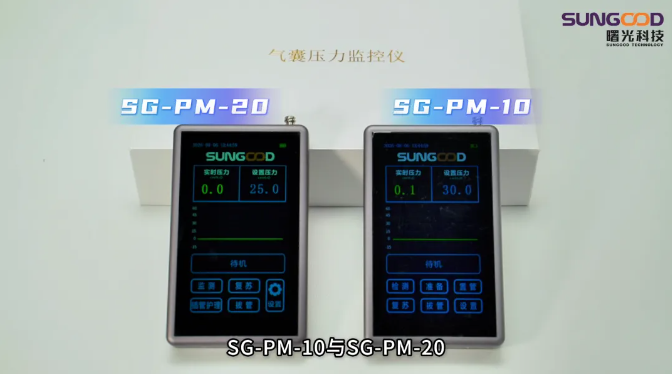
Zhejiang Sungood Technology Co., Ltd.'s Airway Cuff Pressure Monitor was developed to meet exactly this clinical need:
When a patient's cuff pressure remains reliably within the 25–30 cmH₂O safety window, what's reduced isn't only VAP and aspiration risk — it's also antibiotic use, length of hospital stay, and that all-too-common complaint after extubation: "my throat hurts."
[1] Respiratory Therapy Group, Chinese Thoracic Society. Expert Consensus on the Management of Artificial Airway Cuffs (Draft). Chinese Journal of Tuberculosis and Respiratory Diseases, 2014, 37(11): 816–819.
[2] Qu Jieming, Shi Yi. Guidelines for the Diagnosis and Treatment of Hospital-Acquired Pneumonia and Ventilator-Associated Pneumonia in Chinese Adults (2018 Edition). Chinese Journal of Tuberculosis and Respiratory Diseases, 2018, 41(4): 255–280.
[3] National Health Commission of the People's Republic of China. Standard for the Prevention and Control of Ventilator-Associated Pneumonia, WS/T 863—2025. 2025.
[4] Lu Minghui, Wang Shufang, Wei Li, et al. Meta-analysis of the Effect of Continuous Cuff Pressure Monitoring on Preventing Ventilator-Associated Pneumonia. Evidence-Based Nursing, 2021.
[5] Meta-analysis of the Effect of Continuous Monitoring and Control of Artificial Airway Cuff Pressure on VAP Incidence in Mechanically Ventilated Patients. Chinese Journal of Critical Care Medicine (Electronic Edition).
[6] Lorente L, et al. Continuous Endotracheal Tube Cuff Pressure Control System Protects Against Ventilator-Associated Pneumonia. Critical Care, 2014. PMC4057071.
[7] Nseir S, Jaillette E. Continuous Control of Tracheal Cuff Pressure and Ventilator-Associated Pneumonia. Réanimation, 2013, 22: 245–249.
[8] Sevdi MS, Demirgan S, Erkalp K, et al. Continuous Endotracheal Tube Cuff Pressure Control Decreases Incidence of Ventilator-Associated Pneumonia in Patients with Traumatic Brain Injury. Journal of Investigative Surgery, 2021. PMID: 33583304.
[9] Dat VQ, Yen LM, Loan HT, et al. Effectiveness of Continuous Endotracheal Cuff Pressure Control for the Prevention of Ventilator-Associated Respiratory Infections: An Open-Label Randomized, Controlled Trial. Clinical Infectious Diseases, 2021.
[10] Marjanović N, Boisson M, Asehnoune K, et al. Continuous Pneumatic Regulation of Tracheal Cuff Pressure to Decrease Ventilator-Associated Pneumonia in Trauma Patients Who Were Mechanically Ventilated. Chest, 2022. NCT02534974.
[11] The Effect of Different Endotracheal Tube Cuff Pressure Monitoring Systems on Postoperative Sore Throat in Patients Undergoing Tracheal Intubation: A Randomized Clinical Trial. PMC10962134.
[12] Effect of Endotracheal Cuff Pressure Control on Intraoperative Hemodynamics and Postoperative Sore Throat in Laparoscopic Colorectal Surgery. Journal of Nanjing Medical University, 2024.
[13] Post-operative Sore Throat: Comparing the Monitored Endotracheal Tube Cuff Pressure and Pilot Balloon Palpation Methods. PMC6839667.
Product Categories
Contact Us

+86-571-87687066
+86-18106505367

Workshop 1, 1st Floor(Zone B), 3rd Floor; Office Building 3rd&amp;4th Floors, No. 550 Yinhai Street, Baiyang Sub-district, Qiantang District, Hangzhou City, Zhejiang Province, P.R.China
Ready to Begin?
Get in Touch

Now!

sungood

 English
 Español